


Our system has noticed that you are based in , but the current country setting is . Select country

Tattoo care, step by step:
With BELSIL® silicones
Tattoos have gone mainstream – and so has the demand for safe, high-performance aftercare. For cosmetic manufacturers, this opens up a clear opportunity: targeted tattoo-care formulations that support healing, comfort and long-term skin protection. With BELSIL® silicones, we offer versatile solutions spanning the full tattoo-care journey – from skin preparation to aftercare and UV protection.
Key takeaways
Tattoo care:
From niche to formulation category
From “tatau” to “tattoo” – the rise of modern body art

The word “tattoo” traces back to the Polynesian term “tatau”, meaning “to make wounds” – a reference to the traditional technique of marking the skin by repeated puncturing. For centuries, tattooing was deeply rooted in cultural rituals and social identity across Polynesia and other regions of the world.
Modern tattoo culture began its journey to Europe in the late 18th century. After discovering Tahiti in 1769, explorer James Cook brought people with tattoos to England and ultimately ensured that tattoos became en vogue in Europe and worldwide. What started as a curiosity soon spread among sailors, artists and eventually wider society. Today, tattoos have fully shed their subcultural image. They are part of fashion, personal expression and lifestyle
Once associated mainly with subcultures, tattoos have gone mainstream and are now enjoy wide social acceptance across genders, generations and lifestyles. Today, an estimated 10 – 30% of the global population have at least one tattoo, with penetration rates in Europe and the US reaching up to 40% among adults under 40.1 And tattoos tend to spark a longing for more: Once consumers start, many return for more. What follows is a growing need for specialized skin care.
Tattooing deliberately injures the skin barrier, triggering healing processes that can be accompanied by itching, tightness or inflammation – sometimes well beyond the initial healing phase. As awareness of tattoo safety and skin-care compatibility increases, aftercare is evolving from a simple balm to a dedicated formulation category. For cosmetic manufacturers, this shift opens up a new realm: dedicated tattoo-care products that accompany tattooed skin from the very beginning.

The tattoo process
How the ink gets under the skin: the tattooing process explained
To create a tattoo, ink is injected below the epidermis using fine, sharp needles and deposited into the dermis. It is important to note that the skin itself is not dyed: tattoo ink does not chemically bond to the skin. Instead, the pigment remains in its original, chemically unaltered form between the skin layers. Because the epidermis is relatively transparent, the pigment remains visible through it. As the ink is added below the epidermis, it is not affected by the skin’s natural renewal cycle. This is why tattoos can last a lifetime – provided they are supported by a good tattoo care.
Cometh the tattoo, cometh the scar
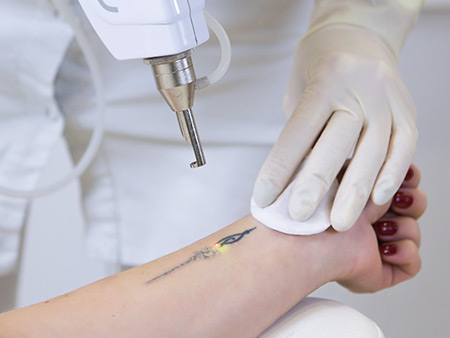
Tattoos and tattoo removal often cause scarring that requires extensive treatment. We have an effective remedy for hypertrophic scars or keloids: silicones formulated as gels and creams for treating developing or existing scars or as the base material for scar sheets.
From needles to norms:
Hygiene and safety regulations
As the tattooing process involves injecting ink into the dermis, this procedure creates thousands of tiny punctures in the skin. From a dermatological perspective, a freshly tattooed area can be considered an uncomplicated superficial wound. For this reason, tattooing is subject to strict hygiene and safety regulations. In Europe, DIN EN 17169 (Tattooing – Safe and hygienic practice), published in 2020, defines professional standards for the tattooing process. While the standard mainly focuses on hygiene during tattoo application, it also includes Annex G, which provides recommendations for post-tattoo care – clearly underlining that aftercare is an essential part of the overall tattooing process.
Immediately after completion, tattoo artists typically cover the fresh tattoo with a sterile bandage to protect it from bacteria and friction. Only once the skin has closed does topical skincare come into play – marking the point where targeted tattoo-care formulations can support healing, comfort and barrier recovery.
Skin irritations:
Key consumer pain points
During the healing phase, tattooed skin is particularly sensitive. In the days and weeks following a tattoo session, many consumers experience typical short-term reactions such as itching, tightness, dryness or visible flaking as part of the natural wound-healing process. While generally harmless, these effects can significantly reduce comfort.
In addition, a population-based survey from 2024 shows that a notable share of tattooed individuals report longer-lasting skin reactions beyond the first 3 weeks, including inflammation, itching, pain and swelling.2 Even when medically uncomplicated, such responses highlight a key challenge: tattooed skin is more vulnerable and reactive than intact skin and therefore requires especially well-tolerated aftercare.
This translates into clear formulation demands. Tattoo aftercare products need to soothe irritated skin, support barrier recovery and protect against external stressors – without overloading compromised skin. Carefully selected, skin-friendly ingredients play a crucial role in meeting these expectations.

Hypoallergenic by nature:
Why silicones care for tattooed skin
BELSIL® silicones are a good choice for tattoo-care formulations. Silicones are generally considered hypoallergenic, meaning they are less likely to cause irritation or allergic reactions. This makes them particularly suitable for aftercare products designed for freshly tattooed, sensitive skin. Standard silicone fluids such as BELSIL® DM (dimethicones) are referenced by the U.S. FDA as skin-protectant active ingredients (21 CFR 347.10). In tattoo-care formulations, they can help support the skin barrier, reduce transepidermal water loss and protect compromised skin from external stressors.
In addition, our BELSIL® silicone specialties play an important role in advanced aftercare concepts. Silicone-based gels are widely recognized in scar care for their ability to support a softer, flatter scar appearance. They help increase hydration of the stratum corneum while still allowing the skin to “breathe”.
Formulation concepts based on silicone gels, such as those using BELSIL® EG 1200, can additionally help reduce itching and discomfort while forming a protective, flexible film on the skin. This combination of protection, hydration and sensory comfort makes silicone gels a powerful building block for modern tattoo-care products.
Our tattoo-care roadmap:
From pre-care to UV protection
Tattooed skin changes over time – and so do its needs. That’s why we developed a complete tattoo-care roadmap with formulation concepts that support tattooed skin at every stage of its journey, from pre-care and immediate post-tattoo hygiene to repair and comfort during healing, gentle cleansing and moisturizing and long-term UV protection. Optional camouflage completes the routine when tattoos are meant to stay unseen.
Swipe through the gallery and see for yourself which formulations our developers are enthusiastic about:
Pre-care:
Urban thirst quencher
Regular moisturizing before tattooing leads to a smoother tattoo process and healing experience. Lightweight concepts based on elastomer gels such as BELSIL® REG 1103 B moisturize and soften the skin. In formulations like the urban thirst quencher, this supports skin flexibility and helps create an ideal canvas for tattooing.
Product recommendation:
BELSIL® REG 1103 B

Tobias Franzke,
Lab Technician
“It was a major challenge to develop a transparent formulation with a very high content of humectants, as these often feel heavy and unpleasant on the skin. However, by taking into account the refractive index of the ingredients and with the help of our BELSIL® REG 1103 B, we were able to create an optically clear and sensorially optimized formulation, in which the gel takes the lead role as the primary emulsifier.”

Protect:
Si-Ca silicone care cream
Once the wounds have closed, targeted skin care can begin. The Si-Ca silicone care cream is designed for this phase, combining the antibacterial, anti-inflammatory and wound-healing properties of Centella asiatica (tiger grass) with silicone technology for a pleasant feel.
Product recommendations:
BELSIL® GB 1020, BELSIL® EG 6000, BELSIL® CDM 3526 VP, BELSIL® PDM 20

Evi Bienert,
Formulation Specialist
“When we worked on the Si-Ca silicone care cream, our challenge was clear. Traditional Si-Ca creams are often sticky and unpleasant to use. In the lab, we explored how silicones could change that. By combining tiger grass with silicone technology, we were able to create a formulation that feels smooth and comfortable on sensitive, freshly tattooed skin, without losing the benefits of traditional Cica creams.”

Healing:
Silk-touch scar gel
As the skin regenerates, itching, tightness and scab formation become noticeable. Our silicone-based scar gel formulation forms a flexible, protective layer on the skin that helps maintain hydration, reduce friction and support a smoother healing process – helping to minimize the risk of scarring.
Product recommendations:
BELSIL® REG 1103 B, BELSIL® WO 5000, BELSIL® TMS 803, BELSIL® DM 10

Anna Reff,
Lab Technician
“Tattoos are works of art on the skin – and such artwork deserves to heal beautifully. That’s why scar prevention is so important during the healing phase. Our silicone-based scar gels help protect regenerating skin, support hydration and reduce the risk of visible or uneven scarring. That’s why they are an essential part of caring for tattooed skin after the first few days.”

Cleansing & moisturizing:
So softly – in-shower body lotion
In-shower care concepts like our “So Softly” – in-shower body lotion are designed to gently cleanse and moisturize tattooed skin in one step. You apply it on wet skin, wash it off and pat the skin dry. Silicones ensure smooth application and easy spreading.
Product recommendations:
BELSIL® EG 1200, BELSIL® CDM 3526 VP, BELSIL® DM 100

Verena Lirk,
Lab Technician
“In our in-shower body lotion, we use BELSIL® EG 1200, a high-viscous elastomer gel, which provides an exceptional silky sensation and a pleasant and cushiony touch. The added silicone wax BELSIL® CDM 3526 VP and the low-viscous silicone fluid BELSIL® DM 100 improve the spreading of the formulation and provide a silky soft touch.”

UV protection:
Vibrant tattoo sun protection
When exposed to sunlight, tattooed skin requires special attention: UV radiation can accelerate skin ageing and lead to visible color-fading. Our vibrant tattoo sun protection lotion provides reliable UV protection with a clear finish – protecting the skin without masking the tattoo while helping to maintain its vibrancy over time.
Product recommendations:
BELSIL® CDM 3526 VP, BELSIL® WO 5000, BELSIL® REG 1102, BELSIL® TMS 803, BELSIL® DM 5

Kathrin Habereder,
Manager Talent Sourcing
“When the sun comes out, so do the tattoos – and of course they’re meant to be seen! Sunblocks that mask the artwork? A no-go. Our transparent vibrant tattoo sun-protection lotion protects both skin and color from UV damage while keeping tattoos fully visible – helping them to maintain their vibrancy over time.”

Camouflage:
Tattoo eraser
Whether for a business meeting, a formal occasion or personal reasons: concealer concepts such as tattoo erasers are designed to deliver high coverage with easy application and a comfortable skin-feel. Silicone technology supports smooth spreading, good wear and a natural-looking finish.
Product recommendations:
BELSIL® TMS 803, BELSIL® WO 5001, BELSIL® eco EG 3001

Deniz-Neslihan Kacar,
Lab Technician
“Sometimes a situation calls for a more neutral look, and a reliable, high-coverage solution makes all the difference. Our tattoo eraser is easy to apply, comfortable on the skin and discreet in appearance, giving people the freedom to decide when their tattoos take center stage.”

Let’s take a deep dive into tattoo care: at in-cosmetics 2026!

Meet our experts at in-cosmetics 2026 to explore formulation concepts, discuss ingredient performance and discover how BELSIL® silicones can support tattoo care - from pre-care to long-term protection. Arrange an appointment with our experts and experience our latest formulation ideas firsthand.
April 14 – 16, 2026
Paris Expo Porte de Versailles, France
Hall 7, booth 1P20
Talk to our experts
At WACKER, we combine sound formulation expertise with a broad portfolio of high-performance silicones for personal care. Let our specialists support you in developing or optimizing tattoo-care formulations – from concept to market-ready solutions. Get in touch with our experts to discuss your specific requirements.
Discover BELSIL® silicones for tattoo-care formulations
Explore our portfolio of BELSIL® silicones designed to support skin compatibility, comfort and performance across the entire tattoo-care routine.
FAQs about BELSIL® for tattoo care
Why does tattooed skin require specialized aftercare formulations?
Tattooing deliberately disrupts the skin barrier, creating thousands of micro-punctures. As a result, tattooed skin is more sensitive and reactive than intact skin and requires aftercare products that support healing, comfort and barrier recovery without overloading compromised skin.
Is tattoo aftercare regulated?
Yes. In Europe, DIN EN 17169 defines hygienic and safe tattooing practices. While the standard mainly focuses on the actual tattooing process, it also includes recommendations for post-tattoo care, highlighting aftercare as an essential part of professional tattooing.
Why are silicones suitable ingredients for tattoo-care products?
Silicones are generally considered hypoallergenic and have a low irritation potential. In tattoo care formulations, they help support the skin barrier, reduce transepidermal water loss and deliver a pleasant, non-greasy sensory profile – making them well suited for sensitive, tattooed skin.
Which role do silicone gels play in tattoo aftercare and scar care?
Silicone gels are well established in scar care. They form a flexible, breathable film on the skin that helps maintain hydration, reduce friction and support a smoother healing process, which can help minimize the risk of visible scarring.
Why is UV protection important for tattooed skin?
UV radiation can accelerate skin ageing and cause tattoo colors to fade. Transparent sunscreen formulations provide effective UV protection without masking tattoos, helping preserve both skin health and tattoo appearance over time.
Related: