

Our system has noticed that you are based in , but the current country setting is . Select country
WACKER to present ceramifying silicone for optimizing thermal barrier performance at the Battery Show in Stuttgart
WACKER will be presenting innovative solutions for battery electric vehicle (BEV) safety at the Battery Show in Stuttgart, Germany, from June 9 to June 11. One of the main areas of focus at the company’s booth in Hall 1, Booth K45, will be a ceramifying silicone that significantly improves the heat and flame resistance of thermal barriers. The company will also be showcasing thermally conductive potting compounds for effective temperature control of power electronics components. Because they exhibit little or no sedimentation, such products can be processed even after prolonged storage without involving any complex pretreatment.
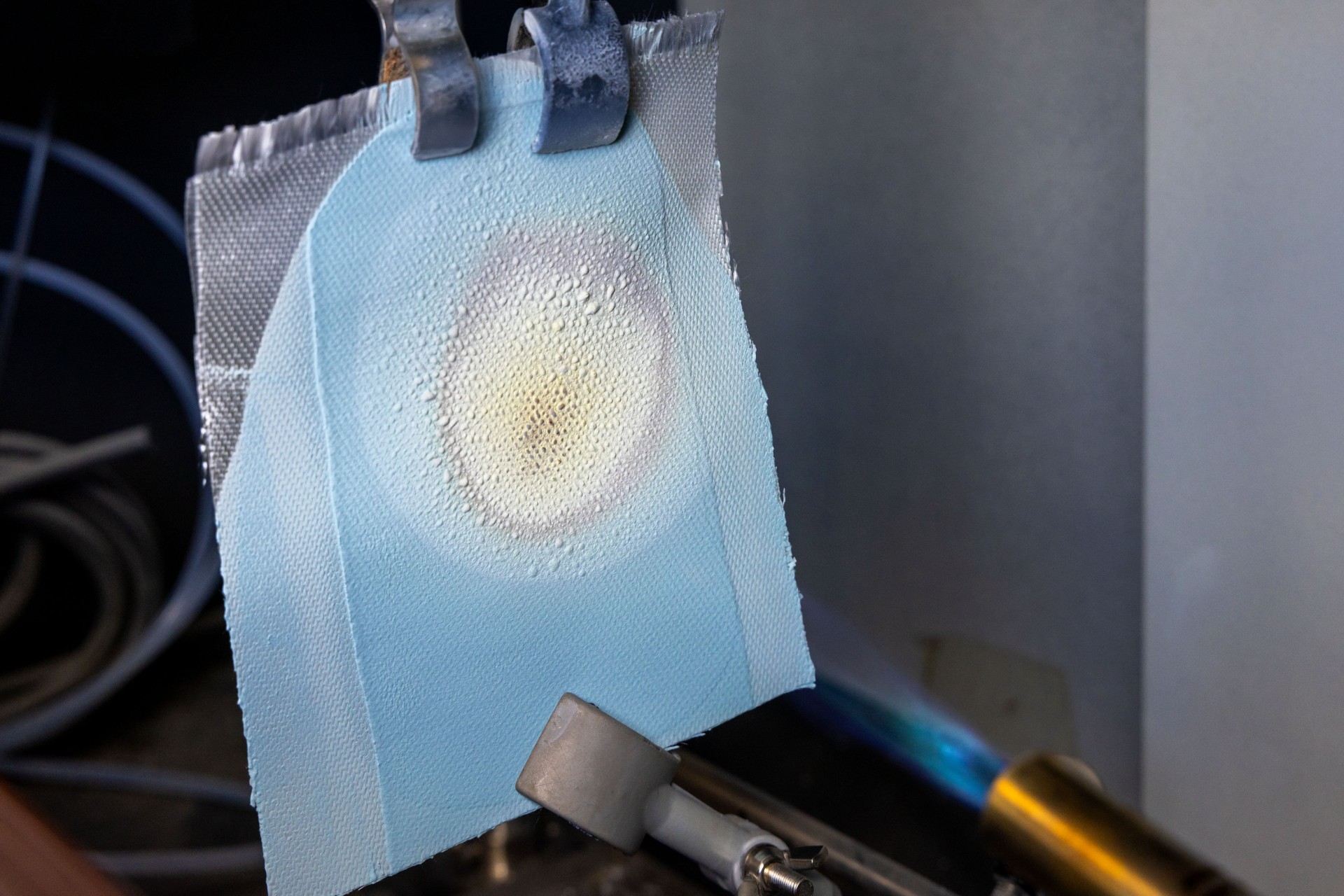
At the Battery Show in Stuttgart, WACKER will be presenting a ceramifying silicone for optimizing thermal barriers in BEVs. This silicone greatly improves the heat resistance and dielectric strength of the battery housing and of other protective systems. Source: WACKER
When it comes to electromobility, safety and fire protection are key issues for battery pack designers and automotive suppliers. Legal requirements are extremely stringent. In the event of battery failure, battery housings and other protective systems must shield heat and any gases that escape until all passengers have left the passenger cabin. In Europe, five minutes is currently the standard for the complete evacuation of a vehicle. In Asia, even longer evacuation times will soon have to be met.
At this year’s Battery Show in Stuttgart, several exhibitors – including WACKER – will be focusing on such protective systems. The company is showcasing a new silicone from the ELASTOSIL® CM line that improves the heat protection and flame resistance of thermal barriers significantly.
After it is applied, the product cures to form a silicone elastomer that is suitable for coating housing components as well as flexible, fabric-like protective systems. At temperatures above 600 °C, this particular silicone loses its elastic properties and forms a ceramic that acts as a protective barrier, shielding the housing and adjacent components from heat and hot gases. Thermal runaway tests with battery cells show that a protective fabric coated with ELASTOSIL® CM is able to reduce the radiant heat of a flame that has a temperature of 1,300 °C to below 150 °C.
The product benefits not only from high flame and heat resistance, but also from another key property. Due to its intrinsic strength, the ceramified silicone acts as a barrier layer. This layer effectively traps particles that are ejected from the defective cell during thermal runaway.
Another booth highlight relates to potting compounds for the thermal management of power electronics components. In the spotlight are ELASTOSIL® RT 7616 TC and ELASTOSIL® RT 7624 TC. They are filled addition-curing silicone elastomer formulations that cure at room temperature. This enables energy-saving processing of large and heavy components. ELASTOSIL® RT 7616 TC has a thermal conductivity of 1.6 W/mK, while that of ELASTOSIL® RT 7624 TC is 2.4 W/mK.
The most important requirements for thermally conductive potting compounds are on-spec thermal conductivity and low viscosity. The latter may cause the particulate fillers in such compounds to sediment after prolonged storage. In that case, the fillers accumulate near the base of the container, where they may also cake together. Redispersing the fillers is time consuming and may even require the use of special mixing equipment.
Thanks to the new ELASTOSIL® RT 7616 TC and ELASTOSIL® RT 7624 TC potting compounds, such issues are now a thing of the past. The rheological properties of both products have been optimized so that sedimentation and agglomeration effects are no longer relevant to customers. If fillers still settle after unfavourable transport and storage conditions, they can be easily redispersed using standard mixing equipment.
ELASTOSIL® RT 7616 TC and ELASTOSIL® RT 7624 TC have a comparatively low viscosity of 5,500 and 8,000 mPa•s (as per DIN 53019), respectively. This means that these products can be used to fill gaps as small as a few hundred micrometers quickly, reliably and bubble-free. They cure at room temperature, which makes oven-free processing of components of any size possible. ELASTOSIL® RT 7616 TC and ELASTOSIL® RT 7624 TC are heat-resistant and low-emission formulations. They are mainly used in battery chargers in the field of electromobility, in DC/DC converters or in inverters for thermal management of discrete electronic components such as coils or inductors.
With its ELASTOSIL®, SEMICOSIL®, SILRES®, and WACKER Silgel® brands, WACKER offers a wide range of products and solutions for electromobility. At the Battery Show in Stuttgart, the Group will feature the following products:
Visit WACKER at the Battery Show Stuttgart 2026 – Booth 1-K45 in Hall 1.
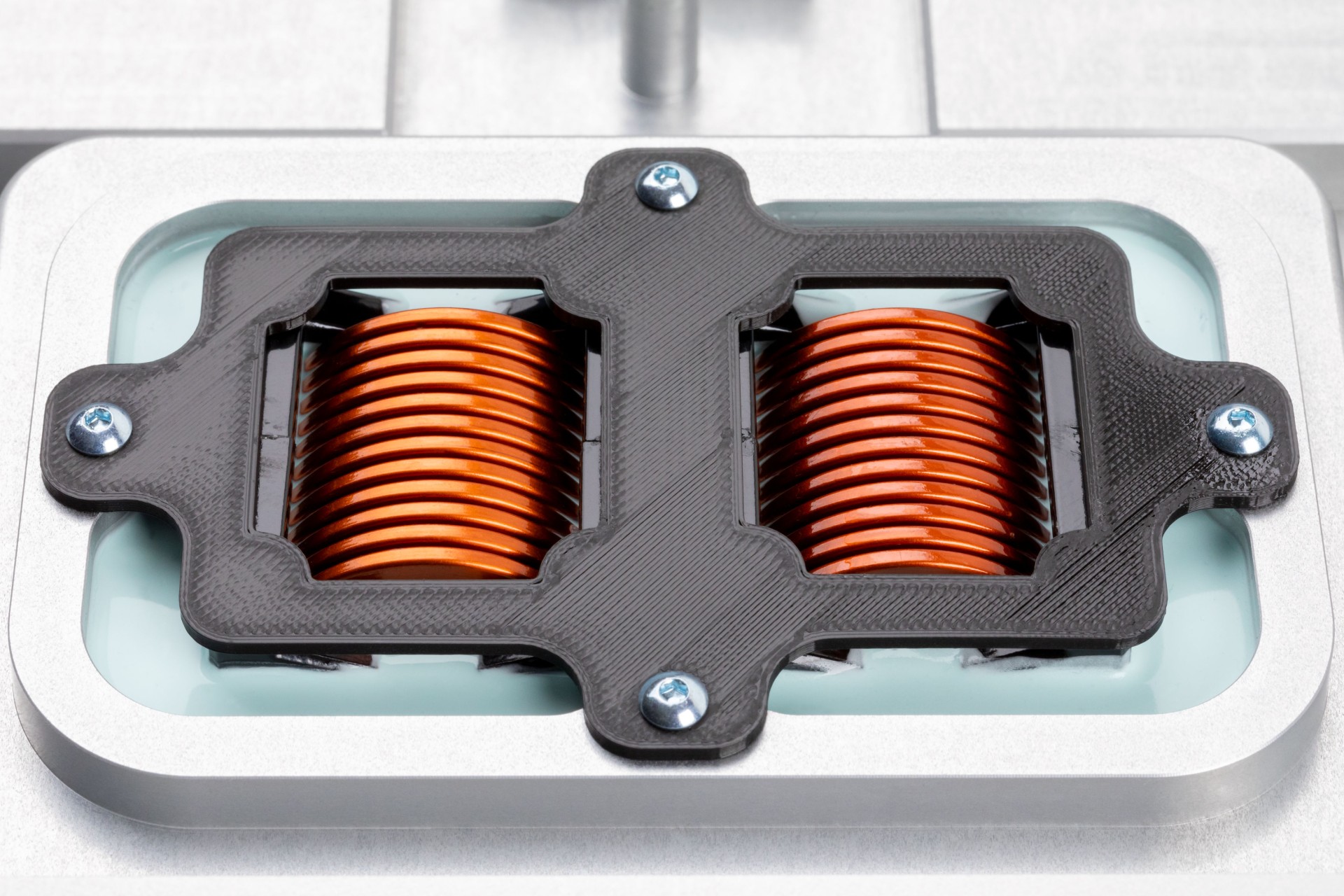
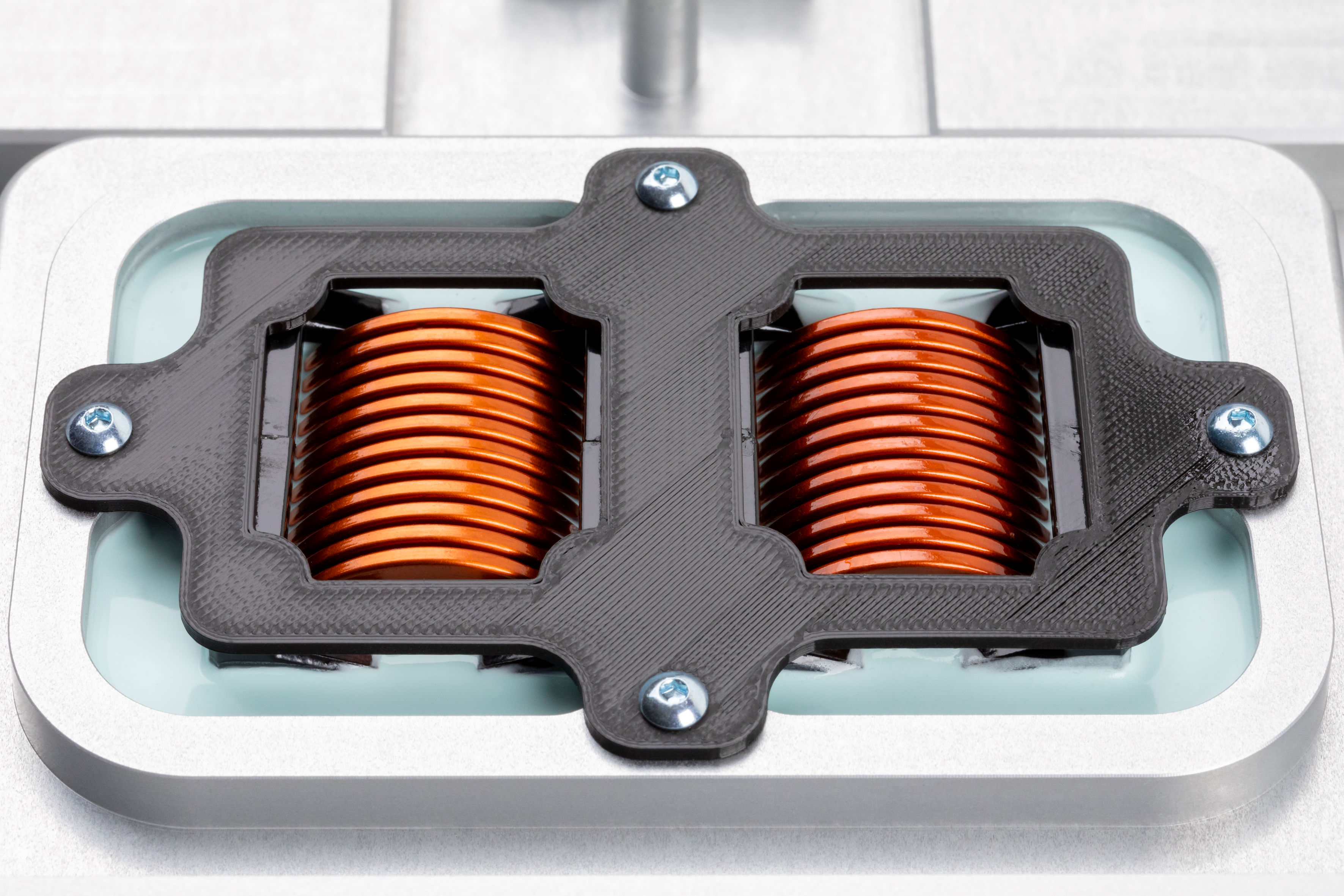
Among the innovations showcased at the WACKER booth are ELASTOSIL® RT 7616 TC and ELASTOSIL® RT 7624 TC. These thermally conductive potting compounds are used for the thermal management of power electronics components. Source: WACKER
Another booth highlight relates to potting compounds for the thermal management of power electronics components. In the spotlight are ELASTOSIL® RT 7616 TC and ELASTOSIL® RT 7624 TC. They are filled addition-curing silicone elastomer formulations that cure at room temperature. This enables energy-saving processing of large and heavy components. ELASTOSIL® RT 7616 TC has a thermal conductivity of 1.6 W/mK, while that of ELASTOSIL® RT 7624 TC is 2.4 W/mK.
The most important requirements for thermally conductive potting compounds are on-spec thermal conductivity and low viscosity. The latter may cause the particulate fillers in such compounds to sediment after prolonged storage. In that case, the fillers accumulate near the base of the container, where they may also cake together. Redispersing the fillers is time consuming and may even require the use of special mixing equipment.
Thanks to the new ELASTOSIL® RT 7616 TC and ELASTOSIL® RT 7624 TC potting compounds, such issues are now a thing of the past. The rheological properties of both products have been optimized so that sedimentation and agglomeration effects are no longer relevant to customers. If fillers still settle after unfavourable transport and storage conditions, they can be easily redispersed using standard mixing equipment.
ELASTOSIL® RT 7616 TC and ELASTOSIL® RT 7624 TC have a comparatively low viscosity of 5,500 and 8,000 mPa•s (as per DIN 53019), respectively. This means that these products can be used to fill gaps as small as a few hundred micrometers quickly, reliably and bubble-free. They cure at room temperature, which makes oven-free processing of components of any size possible. ELASTOSIL® RT 7616 TC and ELASTOSIL® RT 7624 TC are heat-resistant and low-emission formulations. They are mainly used in battery chargers in the field of electromobility, in DC/DC converters or in inverters for thermal management of discrete electronic components such as coils or inductors.
Press Picture



Download
Documents
Press Information
view link