

Our system has noticed that you are based in , but the current country setting is . Select country

New study in India:
Paint performance starts with putty
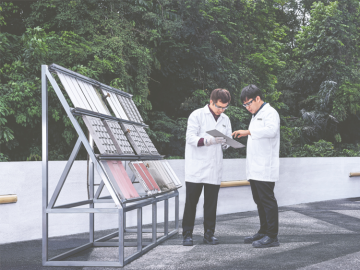
Paint is often blamed for blistering, peeling, poor finish, and gloss loss. But a six-month wall-system study by WACKER’s Global Skim Coat Competence Center in India reveals that putty quality is a critical factor influencing paint consumption, adhesion, surface finish, and long-term appearance.
Key take aways:
Benefits of a high-quality, polymer-modified putty
Although they may appear economical at purchase, weakly formulated putties can increase the total cost of application and ownership due to higher sanding dust, increased primer and paint uptake, weaker adhesion, and reduced long-term appearance.2
1 In the tested premium paint system
2 Based on comparative Indian Market based formulations in WACKER’s wall-system study; formulation details in full article.”
Talk to our expert

Surabhi Jain, Senior Manager of Technical Services at WACKER India
Why is putty quality becoming an issue in the Indian market?
As the Indian cement putty market grows, low-cost skim coats are gaining market share because they are hidden beneath the final finish. However, lower-quality formulations can lead to chalking, excessive sanding dust, poor adhesion, and ultimately, reduced performance of the wall system. Our detailed wall-system study confirms this.
What are your Wall Paint Pain Points ?
Do your wall paints see hairline cracks, peels, blisters, durability and appearance finish issue?
Extensive technical study shows impact of putty on paint performance
The study, 'Impact of Putty Quality on Paint Performance: A Scientific Evaluation of Polymer-Modified Skim Coats', by Surabhi Jain (Technical Manager at Wacker Polymers, India), was first published in the journal 'Paint India' in August 2026. It evaluates the impact of putty quality on three main factors: paint finish, durability and overall system cost.

Paper abstract
On the author

Surabhi Jain received her M.Tech. in Polymer Science from the Indian Institute of Technology (IIT), Delhi. She has over 17 years of professional experience in polymer technology and construction chemicals.
Her work focuses on developing, characterizing, and applying polymeric materials, including coatings, sealants, adhesives, and waterproofing systems.
She has held technical leadership positions at several international and Indian chemical companies and is currently the senior manager of technical services at WACKER India. In this role, she provides technical services and application support for polymer-based solutions.
Abstract
The Indian cement putty market has evolved significantly since its inception two decades ago, expanding from providing smooth substrates for paint finishes to diversified product categories such as waterproof (hydrophobic skim coat) and scented putties. However, recent cost pressures on manufacturers have led to declining putty quality, with possible issues like chalking on surface, increased sanding dust and loss of adhesion.
To assess the implications of this trend, WACKER Polymers India, the market leader of VINNAPAS® DPP conducted an elaborate study evaluating the impact of putty quality on paint finish, durability, and overall system cost. Various wall finish systems comprising of several putty formulations in combination with a primer and either an economy paint or a premium paint were tested. The research followed a structured three-phase testing procedure as per IS 17545, ASTM D3359 and ASTM G154, and examined complete wall systems – comprising of putty, primer, and paint – rather than putty performance in isolation.
Results demonstrated that putty quality significantly influences application efficiency, application costs, long-term durability, and final appearance, regardless of paint tier. This paper presents key findings on these parameters and provides recommendations for optimized putty formulations that balance performance, longevity, and cost-efficiency in wall finishing systems.
The findings affirm that VINNAPAS® VAE polymer optimized skim coats act as a performance layer that governs total applied costs and durability of overall wall systems.
“Our six-month intensive study tested the complete wall system instead of examining putty in isolation and found that putty quality can significantly influence sanding dust, primer uptake, paint consumption, adhesion, and the final appearance of the wall system. These factors are often attributed solely to paint brands.”
Are you a paint producer?
Premium paint needs a quality foundation
Before a paint complaint becomes a paint-brand issue, the putty layer should be examined. The surface beneath can affect adhesion, absorption, finish, and aging. While economy paints tend to delaminate, premium paints can deteriorate visually if applied over a weak, dusty or highly absorbent putty layer.
Paint performance depends on the complete wall system beneath it.


Comparison of paint adhesion. Swipe left or right to see the difference.
Paint systems depend on the quality, cohesion, and absorbency of the surface beneath it. Blistering, peeling, or an unsatisfactory finish may appear to be paint failure, but the putty layer underneath can greatly impact the outcome. Complaints about paint performance can damage a brand's reputation. Applying the right skim coat can prevent surface defects that may later cause problems with paint performance.
This study suggests that VAE-modified skim coats are the most practical way to ensure system reliability. It provides a six-month dataset that quantifies the impact on finish, durability and cost.
Learn more in our free webinar!
Are you a putty producer?
For quality upgrades that the market can see, measure, and appreciate
A quality skim coat creates measurable value where it matters most: less dust, better coverage, stronger adhesion, and a longer-lasting appearance of the walls. These benefits can help premiumize skim coat offerings and provide a competitive advantage in a challenging market.
Putty can be positioned as a performance layer, not a commodity filler.


Comparison of cross-hatch test results. Swipe left or right to see the difference.
All advantages are achieved by small formulation upgrades
With a modest increase in VAE binder such as VINNAPAS® 5010 N and a suitable cement/filler design, it is possible to bring products to market that offer good builders, applicators and homeowners good value for money.
Learn more in our free webinar!
Are you a builder?
Reduce paint consumption and avoid hidden repainting costs
Using a quality putty can reduce hidden cost drivers such as dust, the need for extra primer and paint, rework, and premature loss of appearance. Using a high-quality putty can reduce paint consumption by 23% and help avoid reputational damage due to rework.
The lowest cost for the putty is not the lowest cost for the wall system.


Comparison of paint consumption. Swipe left or right to see the difference.
The study suggests that specifying putty quality before paint failure appears can be helpful. The quality of the wall finish should be specified at the putty stage and not corrected after visible defects appear in the paint.
How can you tell if putty is high quality? More information will be available soon.
Learn more in our free webinar before specifying putty for large projects:
Are you a quality guardian?
For standards that support durable, paint-ready walls
A good standard establishes important baseline requirements. Wall-system testing can connect these requirements to actual paint performance. Putty should be evaluated as part of the complete painted wall system, not only as a standalone layer.
A stronger quality framework can protect builders, paint brands, applicators and end users (i.e. homeowners) from avoidable failures in wall finishes, while also adding further value to the system.
Product-level checks may not capture all visible in-use failures that owners experience.
A standards-led approach can help transition the market from minimum compliance to durable, paint-ready wall systems.
Are you interested in more information? Contact our expert:
Translating the study into practical benefits
The study confirms tests we have been conducting in our Technical Competence Centers worldwide. In the last decades we have tested thousands of formulations for customers with different market situations, building traditions and raw material sourcing.
If you are interested in discussing the opportunities of the studys finding for your region and products, please get in touch. We will be happy to assist you.
Related: